

Advertisement
65% of today’s children will work in jobs that don’t yet exist. For adults, this means one thing: lifelong learning is no longer optional.
Lifelong learning is now a key advantage in the U.S. workforce. It’s not just for personal growth anymore. With automation and changing job needs, it keeps workers relevant and opens new career paths.
Big companies like Amazon and AT&T are leading the way. They invest in their employees’ learning. This leads to better retention, faster promotions, and more innovation.
For workers, the benefits are clear: faster pay raises, more job chances, and better job security. In a fast-changing job market, learning continuously is key to growing both personally and professionally.
The Importance of Lifelong Learning Today
Lifelong learning is key in adapting to careers and life stages. UNESCO sees it as learning that lasts a lifetime, using many methods. The U.S. Department of Education agrees, saying it happens in schools, workplaces, homes, and communities.
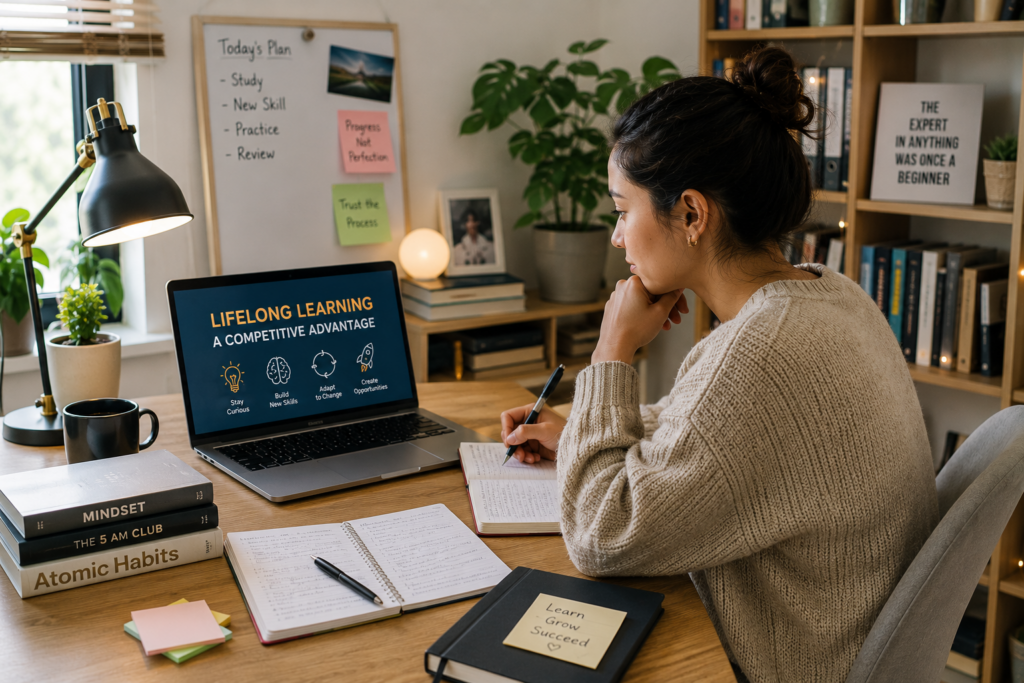
What is Lifelong Learning?
Lifelong learning goes beyond school. It includes degrees, workplace training, and online courses. Adult education focuses on flexible schedules and practical skills.
Today, validation comes in many forms. You can earn certificates, digital badges, nanodegrees, and stackable credentials.
Key Benefits for Professionals
Professionals learn to enhance their skills. They focus on areas like data literacy, cloud computing, communication, and leadership. This boosts their job prospects.
Advancing in your career is easier with new skills and credentials. Learning improves confidence, adaptability, and problem-solving. These skills make you happier and more engaged at work.
Learning also helps you network. You meet people through courses and seminars. These connections can lead to mentorships, collaborations, and job opportunities. Lifelong learning opens doors that traditional credentials can’t.
Lifelong Learning in the Workplace
Companies that focus on learning build stronger teams and clear paths for career growth. They mix formal programs with everyday learning. This helps employees improve their skills and stay interested.
Employee Development Programs
Many companies offer onboarding, leadership training, tuition help, and reskilling. IBM’s SkillsBuild gives specific technical training. LinkedIn Learning is used by many companies for role-based courses. Walmart’s Live Better U helps with degree programs.
Employers work with universities and platforms to offer more adult education. They track how well these programs work by looking at completion rates and skill gaps.
Encouraging Continuous Education
Incentives make learning a regular part of work. Tuition help, paid study time, and learning stipends encourage people to learn. Microlearning fits into busy schedules, great for remote or hybrid teams.
Cultures that value learning create champions and mentorship programs. They also map out learning paths that match career goals. This boosts employee growth and supports long-term career plans.
Impact on Team Dynamics
Cross-training and shared projects help teams work better together. When team members learn new skills, solving problems and innovation improve. Everyone getting a chance to learn prevents feelings of being left out.
To keep teams united, create learning plans that include everyone. Set goals for team learning and reward progress fairly. This builds trust and raises the team’s skills.
The Evolving Job Market
The modern workplace is changing quickly. New tools and global networks are reshaping jobs. Workers face both challenges and new opportunities as roles evolve.
Automation and Outsourcing Trends
Reports from McKinsey and the World Economic Forum show big changes. Automation, AI, and robotics will change many jobs. Some jobs might disappear as routine tasks are automated.
But, other jobs will focus on more important tasks. Machines will handle the repetitive work, leaving humans to do more complex tasks.
Outsourcing and globalization also impact jobs. Companies can move work to other countries to save money. This makes some jobs more competitive, but also increases demand for unique skills.
Skill Requirements for Future Careers
Today, employers want a mix of technical and human skills. They look for digital literacy, data analysis, and AI knowledge. Cybersecurity and cloud computing are also important.
But, soft skills are just as crucial. Creativity, problem-solving, emotional intelligence, and adaptability are key. These skills help workers work well with technology and teams.
To stay ahead, workers should reskill and plan for lifelong learning. Getting the right credentials can also boost career prospects.
Learning Modes: Which One Works for You?
Choosing the right learning mode is key for career growth and personal goals. This guide compares common formats to help you find the best fit. Whether it’s for work or personal development, there’s a way to match your schedule and budget.
Online courses and webinars
Online courses and webinars are great for those with busy schedules. Sites like Coursera, edX, Udemy, and LinkedIn Learning offer a wide range of courses at affordable prices. You can earn professional certificates or take university-led MOOCs to enhance your skills.
Look for courses with hands-on projects and peer interaction. Make sure the instructors are experts in their field. Check if the course is accredited if you need a formal credential. Use a calendar to keep up with webinars and turn recorded sessions into study time.
Workshops and seminars
Workshops and seminars offer hands-on practice and quick feedback. Events like SXSW and the Grace Hopper Celebration, along with university programs and local chambers, provide intensive sessions. These sessions help build skills and networks.
Choose workshops for practical skills, leadership training, or networking. Bring a project to apply what you learn. Follow up with new contacts to reinforce your learning.
Self-directed learning
Self-directed learning involves books, podcasts, articles, and practice projects. Create routines with spaced repetition and set project-based goals. Use GitHub for coding or create a design portfolio.
Be careful not to lack structure and accountability. Join study groups, use apps, or set public goals to stay on track. Combining self-directed learning with courses or workshops can lead to long-term success.
Mix different learning formats to fit your schedule and goals. A webinar can introduce a topic, a workshop can deepen practice, and self-directed study can solidify your skills. This layered approach supports ongoing adult education and makes lifelong learning rewarding.
Lifelong Learning and Personal Growth
Lifelong learning is key to personal growth and adapting to change. Taking small steps can lead to big changes. Here are ways to boost confidence, grow your professional network, and spark creativity.
Building Confidence and Adaptability
Learning new skills can reduce anxiety and make you more open to risks. Psychology shows that learning new skills can make you more resilient. This helps you handle setbacks better and stay focused on your goals.
Start with small challenges that push you a bit. Try speaking up in meetings or giving short presentations. Keeping a journal to track your progress can also help you see how far you’ve come.
Expanding Professional Networks
Learning through courses, attending conferences, and joining online groups can open doors. Meetup and Eventbrite are great for finding local events. LinkedIn is key for building and maintaining professional connections.
Get involved in Slack groups or Reddit forums related to your field. Share useful content, write articles, and answer questions. This can turn casual connections into valuable mentors or partners.
Fostering Creativity and Innovation
Learning from different fields can lead to new solutions. Engineers who learn UX and marketers who study data analytics often come up with innovative ideas.
Use design sprints and workshops to test ideas quickly. Run small experiments, measure results, and then improve. This cycle boosts creativity and supports ongoing self-improvement.
| Focus Area | Practical Steps | Expected Benefit |
|---|---|---|
| Confidence & Adaptability |
| Reduced anxiety, stronger resilience |
| Professional Networks |
| New mentors, job leads, collaborations |
| Creativity & Innovation |
| Fresh ideas, faster product iteration |
How to Start Your Lifelong Learning Journey
Starting your journey of continuous education begins with understanding where you are now. This guide will help you assess your skills, set learning goals, and find resources that fit your schedule and career goals.
Assessing Your Current Skills
Start by doing a skills gap analysis to find out your strengths and areas for improvement. Use tools like LinkedIn Skills Assessment, 360-degree feedback, and Coursera quizzes to gather information. Also, look at your past roles and compare them to job descriptions you want in the future.
Keep a record of your transferable skills and achievements. This will help you see which areas need more work. It makes it easier to match your skills with what employers need.
Setting Learning Goals
Use SMART goals to make your dreams into actionable steps. Make your goals Specific, Measurable, Achievable, Relevant, and Time-bound. Break down big goals into smaller ones, like finishing a course, and long-term goals like getting a certification or changing roles.
Create a learning roadmap with milestones and check-in points. Plan review dates and celebrate your successes. This keeps you motivated in your continuous learning journey.
Finding Resources and Opportunities
Look for a variety of resources: community colleges, MOOCs, professional associations, employer programs, Meetup groups, and libraries. Check for scholarships, company tuition benefits, and federal grants to save money.
Make sure the resources you choose are reputable. Look for instructor credentials, read reviews, and check if certifications are recognized by employers. Use local career centers or HR teams to find company-sponsored training.
Below is a quick comparison to help you choose based on cost, time, and credential value.
| Resource Type | Typical Cost | Time Commitment | Credential Value |
|---|---|---|---|
| Community College | Low to Moderate | Months | High for technical skills |
| MOOCs (Coursera, edX) | Low to Moderate | Weeks to Months | Moderate; verified certificates |
| Professional Associations (SHRM, PMI) | Moderate to High | Days to Months | High for industry recognition |
| Employer Programs | Often Free | Variable | High if aligned with role |
| Meetup Groups & Libraries | Low to Free | Hours to Days | Low to Moderate; good networking |
Use this framework to pick the best options for your goals. Regularly check your progress to keep your learning plan on track.
The Role of Technology in Lifelong Learning
Technology changes how we learn throughout our lives. It offers online courses and simulations that make learning flexible and fun. Here are some ways tech helps us grow our skills at work and in life.
E-Learning Platforms
Coursera, edX, Udacity, LinkedIn Learning, and Khan Academy offer various learning paths. Coursera and edX partner with universities for degrees and certificates. Udacity focuses on nanodegrees for industry skills. LinkedIn Learning and Khan Academy provide ongoing access and free resources.
Features include video lectures, assignments, and professional certificates. Employers and universities use systems like Canvas and Moodle. Now, platforms offer analytics and learning paths tailored to you.
Mobile Learning Apps
Apps like Duolingo, Blinkist, and Skillshare mobile make learning easy during breaks. They offer quick lessons that build learning habits. Push notifications and offline access help you learn anywhere.
Combine online courses with daily app use for better learning. Use apps for drills, summaries, and review sessions. This mix helps you stay consistent and apply what you learn.
Virtual and Augmented Reality
Immersive tech changes training. VR and AR let you practice without risk. Medical students practice procedures, and technicians train on industrial scenarios.
Tools like Oculus for Business and Microsoft HoloLens are used for training. They help retain skills and make training safer. While costs are high, the benefits often outweigh them.
Overcoming Barriers to Lifelong Learning
Many adults want to grow, but common hurdles slow progress. This guide offers practical steps for busy professionals and learners. It covers time management, financial considerations, and overcoming the fear of failure.
Time management is a big obstacle. Full-time jobs, family duties, and burnout leave little time. Use time blocking to schedule learning. Try microlearning sessions that last 10–30 minutes.
Turn commutes and lunch breaks into study time. Use the Eisenhower matrix to focus on what’s important.
Tools can help manage time better. Google Calendar, Pomodoro timers, and apps like Notion or Todoist keep you on track. Start small and build consistent habits.
Financial barriers limit access to courses. Free MOOCs and public library resources help. Community college classes offer great value. Check for employer tuition assistance and scholarships.
Think about the return on investment before spending on certificates. Compare costs with expected salary gains or career changes. Use budgeting tactics like learning stipends or tax-advantaged accounts.
The fear of failure holds many back. Impostor syndrome and perfectionism make people shy away. View setbacks as chances to learn and improve.
Join supportive communities and find peer accountability partners. Practical supports reduce anxiety. Seek formative feedback and read growth-mindset work. Small wins build confidence.
| Barrier | Quick Tactics | Low-Cost Resources |
|---|---|---|
| Limited time | Time blocking, microlearning, Eisenhower matrix | Podcast lessons, library ebooks, short MOOCs |
| Budget limits | Assess ROI, negotiate employer support, use stipends | Community college courses, scholarships, employer tuition |
| Fear of failure | Start small, seek feedback, join peers | Coaching groups, accountability partners, growth-mindset books |
| Burnout | Schedule breaks, mix formats, prioritize goals | Mindfulness apps, short workshops, library courses |
Lifelong Learning for Different Life Stages
Learning paths change as we grow. Each stage needs its own approach to make learning useful. Here are tips for the early years, mid-career, and later life.
Learning in Your 20s
This decade is perfect for trying new things. Take internships, short courses, and side projects. Show off your skills with a portfolio that includes real work.
Focus on basic skills like talking well and using technology. Look for affordable classes and programs at work. Networking can help you find jobs and mentors.
Continuing Education in Mid-Career
By mid-career, you want to dive deeper and lead. Pick programs that fit your career goals. Courses from top schools like Harvard or Wharton can boost your management skills.
Think about getting professional certificates or bootcamps for new skills. Use work benefits or study part-time to keep a balance. Learning that leads to promotions is a smart investment.
Lifelong Learning in Retirement
Learning in retirement is about finding purpose and connecting with others. Look into volunteer training, community college, and Osher Lifelong Learning Institutes. These keep your mind sharp and build friendships.
Learning to use digital tools helps older adults stay connected. Mentorship between generations lets retirees share their knowledge and learn from others. This keeps them engaged and energized.
Measuring the Impact of Lifelong Learning
Learning can lead to real results. This guide will show you how to measure this impact. You’ll learn about KPIs, data sources, and success stories that help in career growth.
- Completed certifications: count certificates from Coursera, edX, or bootcamps and note dates.
- New skills acquired: list technical or soft skills added to resumes and portfolios.
- Promotions and salary increases: track title changes and percent salary growth over time.
- Successful role transitions: record moves such as tester-to-developer after a coding bootcamp.
- Portfolio items: number of projects or case studies that demonstrate applied skills.
- Time-to-competency: weeks or months from course start to independent performance.
Employer-focused KPIs
- Employee retention rates: compare cohorts that used training benefits versus those who did not.
- Internal hire ratios: share of open roles filled by existing staff after upskilling.
- Productivity improvements: output per employee before and after program participation.
- Reduced time-to-fill skill gaps: days saved when internal training supplies needed talent.
- Training ROI calculations: net impact on revenue or cost savings divided by training spend.
Reliable data sources
- HRIS and payroll systems for promotions and salary records.
- LMS analytics to measure course completion, engagement, and assessment scores.
- Performance reviews for competency and behavioral change evidence.
- LinkedIn profile updates and endorsements to validate public-facing progress.
Success stories and testimonials
Real examples show the power of learning. A software tester became a developer in nine months. They added three apps to GitHub. A project manager got PMP certification and moved up to a senior role in 18 months.
Amazon and AT&T employees used programs to get into better-paying jobs. They documented their progress and paths.
Keep track of your learning journey. Note dates, certifications, and outcomes. Use this data to show your growth to employers.
Looking Ahead: The Future of Lifelong Learning
The future of lifelong learning will see big changes. These changes will make learning easier and more measurable. Expect to see more microcredentials, training paid by employers, and jobs based on skills shown rather than degrees.
Policy changes will help fund training and reskilling. This will help adults learn new skills without taking on a lot of debt.
Technology will play a key role in education trends. AI will help tailor learning to each person. Blockchain will make it easier to check if someone has the right skills.
Online programs will focus on projects and groups. This will help busy people learn and show they can do the job.
The lifelong learning mindset is all about being curious and adaptable. It’s about taking charge of your career. This mindset is as important as any technical skill because it lets you keep learning and growing.
To make the most of learning, keep learning regularly. Use tools and resources from your employer. Track your progress with clear goals.
Stay connected with others in your field. This will help you turn new skills into real job opportunities.