
Advertisement
More than 85% of American adults now carry a smartphone. These devices track location, health, or payments. This shows how deeply personal tech already touches our lives.
This article gives a quick look at the future of personal technology. It talks about trends that will change work, health, and social life in the next ten years.
Expect big changes thanks to artificial intelligence, connected devices, and faster wireless networks. Companies like Apple and Google are leading the way. They’re investing in wearables, AR/VR, and AI.
Adoption will vary. Some features, like smarter voice assistants, will get better slowly. But, things like brain-computer interfaces will likely stay rare or tightly regulated.
Later, we’ll explore important issues like privacy, cybersecurity, and sustainability. This will give you a full view of the digital transformation in personal technology.
The outlook is cautiously optimistic. We can expect more convenience and health benefits. But, there are real questions about data control, security, and social impact.
The Rise of Artificial Intelligence in Personal Devices
Personal gadgets are getting smarter fast. AI is changing our daily routines, from smarter alarms to devices that act on their own. This shows a big leap in personal tech and hints at a future where devices meet our needs before we ask.
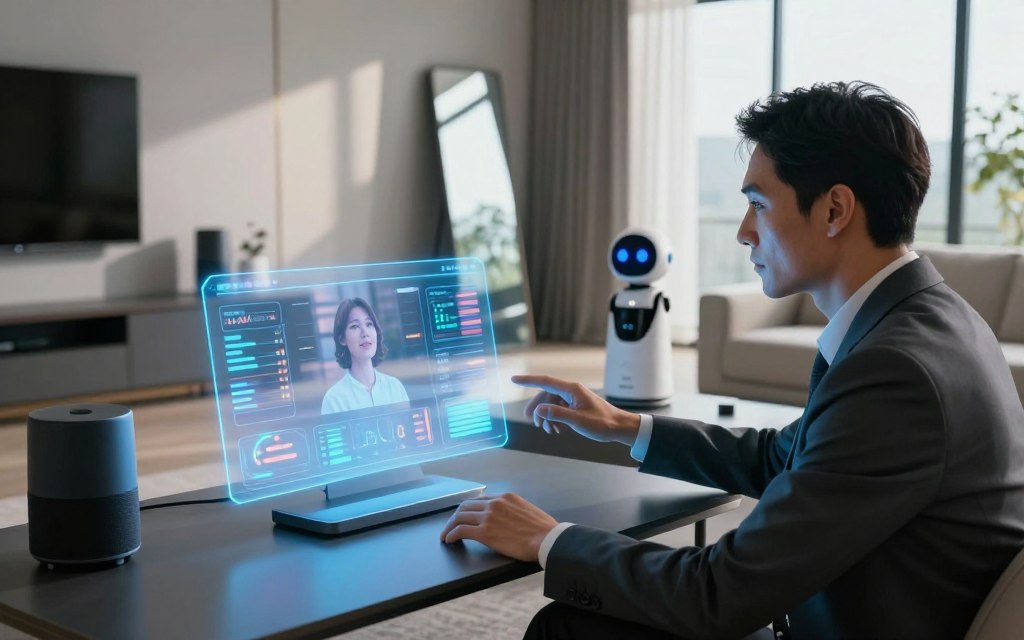
Voice assistants started as simple tools. Now, Apple Siri, Google Assistant, and Amazon Alexa can do much more. They can pause notifications when you’re driving and remind you of important tasks.
AI Assistants and Their Impact
Devices are getting smarter on their own. Apple’s Neural Engine and Google’s Tensor Processing Units are key to this. They make devices faster and more private, but in different ways.
Workplaces are getting more productive thanks to AI. Assistants handle routine tasks, freeing up time for more important work. Tech also helps people with disabilities, offering voice navigation and tailored interfaces.
Machine Learning for Personalized Experiences
Machine learning is now more than just music and movie recommendations. Apps tailor news, lessons, and workouts to your interests. Wearables like Fitbit and Apple Watch track your health, alerting you to any issues.
Companies use more personal data to improve their services. But there are risks, like seeing only what you’re interested in and missing out on new things. It’s all about finding the right balance.
Designing tech with care is key. It helps keep the surprises in life while still offering personalized experiences. This is how we move forward in personal tech.
The Evolution of Wearable Technology
Wearable technology is moving beyond simple step counters and heart-rate monitors. Now, devices aim to provide detailed health data, last longer, and fit seamlessly into our lives. This change is shaping the future of personal technology for everyone.
Health Monitoring Capabilities
Apple Watch can now do ECGs and detect falls. Dexcom’s smartwatches help manage diabetes by tracking glucose levels. New features like pulse oximetry and skin temperature sensors are also coming.
Getting FDA approval is key. It makes clinicians trust the data from these devices. This trust helps in managing health remotely and preventing diseases.
These devices can send alerts for health issues. They can also help health systems plan better care. This is thanks to integration with electronic health records.
Integration with Augmented Reality
Augmented reality is changing wearables. It offers hands-free, context-aware experiences. Apple’s Vision Pro and Microsoft HoloLens are leading the way with new forms of AR.
AR can help with everything from navigation to fitness coaching. It works well thanks to fast edge computing and small batteries. This makes it useful every day.
Designing wearables is all about user experience. They need to be comfortable, look good, and be socially accepted. Privacy is also a big concern, with always-on cameras and recording.
The Role of Internet of Things (IoT)
The Internet of Things changes how we live, work, and travel in cities. Smart sensors, voice platforms, and on-device processing make homes and cities react to data in real-time. This section explores the progress in home automation and the infrastructure for smart urban services.
Home Automation Advances
Big names like Amazon Alexa, Google Home, and Apple HomeKit are working together better. They use the Matter standard to make it simpler to use different brands. This makes life easier for everyone.
Automation is used in many ways. For example, homes can adjust the temperature based on your habits. Smart meters help save energy, and appliances can manage tasks on their own. Security systems now use cameras to spot unusual activity and keep your data safe.
Edge computing in homes makes video and audio faster and keeps your data close. Companies are offering plans for monitoring and updates to make devices last longer.
Smart Cities and Infrastructure
Cities are getting smarter with connected lights, traffic management, and waste systems. These changes help save money and reduce pollution. Environmental monitoring tracks air and noise to protect public health.
Partnerships between cities and companies, like Cisco and Siemens, are making a difference. Funding from the government helps turn small projects into big city systems.
Data privacy is key when cities collect information. Anonymization and community checks help keep data safe. Smart systems also make energy use better, traffic flow smoother, and emergencies faster to handle.
Looking Ahead
As we move forward, homes and cities will pick systems that are easy to use but also give control. The future of smart homes and IoT will be shaped by standards and designs that put data on devices first. This will benefit millions of people.
Advances in Personal Computing
The next wave of personal computing combines new hardware with cloud services. This change makes devices more flexible and connected. Users will see better multitasking, longer device life, and new shapes that fit different lifestyles.
Samsung Galaxy Fold and Z Flip, Oppo, Xiaomi, and LG and TCL’s prototypes show the future of screens. These designs make screens bigger while still being easy to carry. Microsoft Surface points to laptops and tablets merging, making work easier.
Durability and hinge quality are key for trust in devices. New materials like ultra-thin glass and polymers help screens last longer. Wearable displays, detachable modules, and modular accessories add features like cameras and health sensors.
Cloud services make devices feel lighter and smarter. Apple iCloud, Google Drive, and Microsoft OneDrive sync data across devices. This lets work or games pick up where they left off without starting over.
Edge-cloud hybrids reduce lag by moving compute closer to users. AWS Wavelength and Azure Edge Zones enable fast AI and gaming. This supports powerful work on modest devices.
Security choices affect how we adopt new tech. Encryption and zero-trust protect data as it moves between cloud and device. Subscription models change how we pay for performance over time.
New form factors and cloud services drive digital transformation in personal tech. Users will enjoy flexible interfaces, seamless device continuity, and cloud-enhanced capabilities. This makes powerful computing personal and portable.
Enhanced Communication Tools
The next wave of personal tech will change how we meet, teach, and work together from afar. Meta and Microsoft are leading the way with new meeting formats. Startups and research labs are improving how we feel present remotely with better capture, rendering, and AI-driven avatars.
Virtual Reality Conferencing
Virtual reality conferencing is becoming more than just a novelty. Meta Quest’s Horizon Workrooms and Microsoft Mesh in Teams are making remote meetings feel more real. They help teams read each other’s nonverbal cues and work on 3D designs together.
Immersive whiteboards and simulated environments are making training more interactive. Companies are using VR for design reviews, medical training, and remote site walkthroughs.
But, there are still challenges. Some users get motion sickness. High-performance headsets and fast broadband are needed but not always available. Also, old productivity tools need to work better with new tech.
The future looks bright with better displays, lighter headsets, and more realistic avatars. AI is making interactions feel more real by tracking facial and body movements in real-time.
Holographic Communication
Holographic communication uses 3D video and light-field displays to create lifelike telepresence. Microsoft research and startups are testing it in enterprise demos and high-end events.
Soon, we’ll see holographic demos, hybrid event stages, and better telemedicine sessions. 3D visuals will help doctors examine models or scans in detail with remote colleagues.
But, there are big technical challenges. Capturing and rendering 3D video need a lot of data. We need standardized formats and efficient compression methods for it to work widely.
As personal tech evolves, holographic systems might join VR conferencing for even better communication. The future will depend on tools that are both realistic and easy to use.
Cybersecurity in Personal Technology
Our personal devices store a lot of sensitive info. This includes health data from wearables, location info from phones, voice recordings, and smart home camera feeds. Keeping these devices safe is crucial for both users and makers.
Importance of data privacy
Many states have rules for device makers and apps. California’s CPRA gives more rights to consumers over their data. Healthcare data gets special protection under HIPAA when apps handle medical records.
There are talks in Washington, D.C. about federal privacy laws. These could change how national products handle data.
Privacy tech helps keep data safe. Apps like Signal and Apple iMessage use end-to-end encryption. Apple’s Siri and Google’s Android features process data locally to reduce cloud risks.
Techniques like differential privacy and federated learning help companies improve services without sharing too much data.
Users play a big role in keeping devices safe. Use strong passwords, enable multi-factor authentication, and install updates quickly. Also, check what permissions apps have.
Emerging threats and solutions
New features bring new risks. Scams using deepfake voices and videos aim to trick people. IoT botnets, like Mirai, can take over devices.
Supply-chain attacks and AI model attacks target systems, not just devices.
Hardware-based defenses offer strong protection. Secure boot and systems like ARM TrustZone and Apple Secure Enclave make devices more secure. Zero-trust networking and AI-driven threat detection also help.
Industry and government are stepping up. Device makers focus on quick fixes and clear security updates. Cybersecurity startups create tools for users, like easy vulnerability scans.
Government advisories push for better IoT security and faster fixes. This keeps our devices safe and valuable for daily use.
Staying ahead in personal tech means smart design and informed users. This balance ensures our devices are well-protected and useful.
The Future of Mobile Technology
Mobile tech is changing fast. Carriers and makers are changing how we work, play, and stay healthy. This section looks at big changes in networks and devices that will shape the future of tech.
5G and its implications
New networks offer faster speeds and less delay. Features like network slicing let operators focus on specific tasks. This also means thousands of devices can work together in small areas.
These changes make cloud gaming smoother and AR/VR streams stable. Telemedicine gets better with clearer video and faster uploads. Smart homes work better when devices share a fast network.
So far, cities have seen most of the 5G rollout. Verizon, AT&T, and T-Mobile are leading in the U.S. But, rural areas still lack coverage. Research looks into new tech like terahertz links and AI networks.
Next steps for devices
New devices will have stronger chips and AI helpers. Apple’s A-series and M-series work with Qualcomm Snapdragon parts. This means faster and more private processing.
Batteries and charging are getting better. Devices will last longer and charge faster. Phones are also becoming easier to fix and more sustainable.
Software is moving towards instant experiences. Apps load faster and work across devices. Features like Apple Continuity and Google’s Nearby Share make switching between devices easy.
New sensors are making phones do more. Cameras get better in low light. Lidar and depth sensors open up AR and measure air quality and radiation.
| Area | Current Strengths | Near-term Trends | Impact on Users |
|---|---|---|---|
| Networks | Faster peak speeds, lower latency | Network slicing, edge computing | Smoother streaming, reliable telehealth |
| Chips | High performance, energy efficiency | Integrated AI accelerators | Better on-device AI, privacy gains |
| Sensors | Cameras, GPS | Lidar, environmental monitors | Enhanced AR, health and safety alerts |
| Software | App ecosystems, app stores | Instant apps, cross-device continuity | Fewer installs, seamless workflows |
| Market | Strong OEM competition | Global innovation from Apple, Samsung, Google, Xiaomi | Faster feature adoption, diverse price points |
Mobile tech will keep pushing limits. Work will be faster, cameras will sense more, and networks will connect devices smarter. These changes will shape our daily lives.
Changes in User Interface Design
Designers are moving away from screens and keyboards. They’re exploring touch, voice, gesture, and neural inputs for a more natural feel. This shift will change how we interact with technology every day.
Voice and Gesture Recognition
Voice assistants from Google and Apple are getting better at understanding us. They can now handle context and speech processing right on the device. This means we can give commands and use devices without always needing the internet.
Gesture control from Samsung and Google Pixel lets us navigate without touching the screen. This is great for people who can’t use their hands or prefer not to.
These advancements make technology more accessible. They’re perfect for when you’re driving or wearing AR headsets. But designers still face challenges like dealing with background noise and finding universal gestures.
Brain-Computer Interfaces
EEG headsets from Muse are making brain control more interesting for consumers. Companies like Neuralink and Synchron are working on implantable systems for deeper research. But, we’re still far from seeing these in everyday devices.
For now, brain-computer interfaces will help people with paralysis or other mobility issues. They might also open up new ways to enjoy entertainment and interact with technology. But, we need to address concerns about privacy and safety before they become mainstream.
- Improved natural language and multimodal inputs make devices more responsive.
- Gesture standards will be needed for cross-device consistency.
- Regulatory oversight and clinical validation will shape BCI timelines.
Sustainability in Personal Tech
Designers, manufacturers, and users are moving towards greener choices. They aim to reduce waste and make devices last longer. Brands like Apple and Samsung are setting goals for their suppliers to use cleaner methods and be more open.
Eco-friendly Materials and Practices
Recycled aluminum, recovered rare-earth elements, and bio-based plastics are now being used in production. Framework’s modular laptop is a great example of how devices can be fixed and last longer. Trade-in programs and certified refurbishment markets help consumers choose products that last and reduce waste.
Transparency in the supply chain helps avoid conflict minerals and ensures ethical sourcing. Laws and support for repair encourage manufacturers to make devices that last. Big retailers and companies have made promises to use sustainable materials in their products.
Energy Consumption Innovations
New battery technologies and better power management are making devices more energy-efficient. Solid-state cells and batteries with higher energy density mean less charging is needed. Fast-charging tech also reduces energy waste during charging.
Low-power silicon, special NPUs, and smart OS settings reduce energy use. Charging devices when the grid is powered by renewables is another innovation. Vehicle-to-home and vehicle-to-grid systems help use stored energy when it’s available.
Rules and grants are influencing companies to make greener choices. ESG reporting helps investors and customers see how companies are doing in terms of energy use.
- Materials: recycled metals, bio-plastics, rare-earth recovery.
- Design: modular repairable devices, extended software support.
- Energy: solid-state research, low-power chips, smart charging tied to renewables.
Cultural Shifts Driven by Technology
Technology is changing how we live, work, and interact. Devices and platforms are reshaping our daily lives. This section explores how digital tools affect our habits, norms, and the future of personal technology in both workplaces and social spaces.
Remote Work and Its Longevity
Cloud services, Zoom, Microsoft Teams, and Slack enable teams to work together without being in the same place. Cloud desktops and fast mobile networks support work from anywhere. VR workspaces are starting to test new ways of collaboration.
Commuting has decreased in many cities as hybrid work models become more common. People are moving to suburbs and smaller towns, no longer tied to long commutes. Employers are focusing on outcomes and using asynchronous workflows to keep teams productive across time zones.
New tools are monitoring wellness while protecting privacy. Companies like Microsoft and Google are adding wellness features to their platforms. These changes suggest remote work will continue, supported by digital coworking and flexible schedules.
Changes in Social Interactions
Social media now favors short-form video and algorithmic feeds that shape our attention. Platforms are pushing interest-based groups and private messaging, changing how communities form online. Youth are using AR and VR spaces to hang out, blending gaming and social life in brands’ outreach strategies.
Expect new digital etiquette as video fatigue and constant availability become common. Movements around digital detox and clearer boundaries at work and home are gaining traction. Mental health services that use apps and teletherapy are growing in response to higher awareness of tech’s role in wellbeing.
Brands and institutions must adapt to these shifts. The future of personal technology will guide social norms through design choices and platform policies. Gentle design and clear consent tools can help balance connection with privacy and mental health.
Education and Personal Technology
The digital world is changing how we learn. Now, devices, apps, and cloud services let students learn at their own pace. Schools and employers use tools that link skills to real-world outcomes.
Online learning platforms like Coursera, Khan Academy, edX, and Udacity offer micro-credentials and partnerships with universities. They use mobile-first designs and adaptive algorithms to break down long courses into smaller, personalized paths.
Augmented reality and virtual labs bring simulations to phones and wearables. Programs aim to bridge the digital divide, giving devices and internet access to those who need it most.
Key classroom shifts
- Automated grading lets teachers focus on coaching.
- Learning management systems include tools for different teaching methods.
- Partnerships between platforms and employers make credentials more relevant to jobs.
AI tutors extend learning hours, offering personalized help. They provide explanations, practice, and track progress for each student.
Companies like Duolingo use machine learning to adjust language lessons instantly. Schools and apps use AI tutors to offer help when students need it.
Issues to watch
- Bias and accuracy in AI feedback raise ethical concerns about fairness.
- Student privacy requires strict data practices and FERPA compliance.
- Human teachers are still key for social learning and critical thinking.
Future tools will combine natural conversation, video, and AR for better tutoring. Verified credential paths will link AI-supported learning to recognized achievements. This will make education and personal technology work together for wider access and better results.
The Intersection of Health and Technology
Health care is changing from short visits to ongoing, data-based support. Hospitals and companies like Epic and Cerner are leading the shift to electronic records. Standards like HL7 FHIR and U.S. ONC rules help make records shareable.
Patients can now see all their health info in one place, thanks to Apple Health Records and APIs. This includes tests, prescriptions, and data from wearables.
Digital health records aim to give patients complete histories and better chronic disease care. But, adding data from wearables and home monitoring is still a challenge. Doctors need reliable data and clear consent rules.
When data quality improves, we can use population analytics and personalized care plans. This can lead to better health outcomes without losing privacy.
Telemedicine grew fast during the pandemic and keeps growing. Companies like Teladoc and Amwell, and many health systems, are leading this charge. They offer remote monitoring, high-quality video exams, and AI tools for quick help.
As Medicare, Medicaid, and insurers change their rules, more providers will use hybrid care models. This means more virtual visits and better care.
In the future, expect telehealth and digital records to work together better. We’ll see more remote diagnostics, at-home lab tests, and AI helping doctors make decisions. These changes can make health care more accessible, affordable, and effective.