

Advertisement
Did you know that nearly 70% of students struggle to grasp key concepts during their learning journey? This statistic highlights the importance of effective teaching strategies. One powerful method is the ongoing process of assessment that supports both teachers and students in understanding learning goals.
Formative assessment is not just a single test or quiz; it’s a continuous process that helps educators identify what students know, what they misunderstand, and what they need to learn next. This approach allows for timely feedback and adjustments in instruction, fostering an environment where students can thrive.
Throughout this article, we will explore how evidence from assessments can inform classroom decisions. We’ll also discuss practical strategies that teachers can implement without needing expensive resources. Understanding the difference between formative and summative assessments will be crucial as we delve into the five core practices that enhance student learning.
Introduction to Formative Assessment
Understanding how students learn is essential for effective teaching. Formative assessment is a collaborative process that takes place with students, not merely to them. This approach is continuous and often low- or no-stakes, aimed at gathering evidence of student thinking.
Methods like discussions, online surveys, and quick quizzes are common tools used in this process. They help capture patterns in student cognition, including partial understanding and misconceptions. Rather than just marking correct or incorrect answers, formative assessment digs deeper into what students truly grasp.
What is Formative Assessment?
At its core, formative assessment happens during the teaching and learning cycle. It is not limited to a single moment after instruction. This type of assessment is:
- Planned: Teachers design assessments with specific learning goals in mind.
- Ongoing: It occurs regularly to monitor progress.
- Collaborative: Students and teachers work together to enhance understanding.
- Low-stakes: It minimizes pressure, encouraging honest feedback.
- Responsive: Adjustments are made based on student needs.
Why Formative Assessment Matters in Education
Incorrect or partially correct answers can be particularly revealing. They provide valuable insights into student understanding and learning needs. For instance, a student’s misunderstanding can guide the teacher in addressing specific gaps in knowledge.
Checks for understanding, such as quick polls or informal quizzes, support the formative process but do not constitute it entirely. Effective formative assessment involves analyzing evidence from various sources—questions, conversations, and observations—to identify misconceptions.
Key Characteristics of Formative Assessments
Clear success criteria and learning goals are vital. They help students understand why they are learning specific content and how to recognize their progress. Furthermore, formative assessments should foster student agency, self-direction, and motivation. They should not create unnecessary testing pressure.
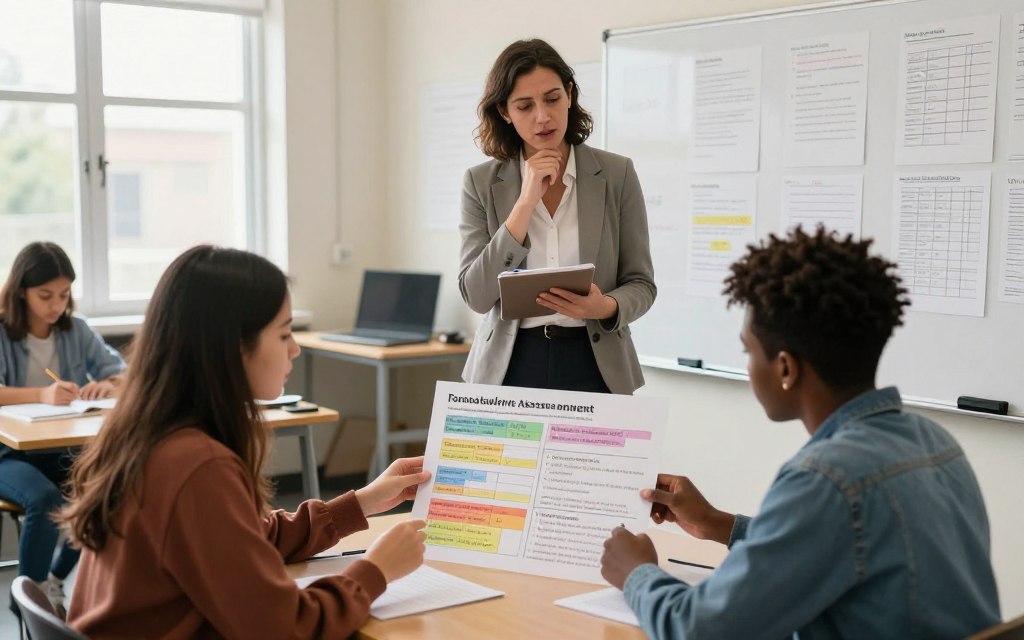
Formative Assessment vs. Summative Assessment
Recognizing how formative and summative assessments differ can enhance teaching strategies. Each type serves a unique purpose in the educational landscape. Understanding these differences helps teachers make informed decisions that can positively impact student learning.
Understanding the Differences
Formative assessments are ongoing and help identify student strengths and challenges during the learning process. They provide immediate feedback that guides teaching and helps students improve. In contrast, summative assessments evaluate student learning at the end of a unit or course. These assessments may include:
- Exams
- Final projects
- Essays
- Presentations
- Reports
While formative assessments are often low-stakes, summative assessments typically carry more weight in grading.
When and How Each Assessment is Used
Formative assessments are utilized throughout a unit to guide learning. Examples include:
- Exit tickets
- Weekly quizzes
- Peer reviews
- Class discussions
Summative assessments, on the other hand, occur after instruction. They measure overall achievement and understanding, often contributing to final performance judgments.
Benefits of Combining Both Types
Using both formative and summative assessments can provide a comprehensive view of student progress. Formative evidence helps teachers identify gaps before a summative assessment, allowing time for students to revise their understanding. Well-designed summative assessments should measure application and conceptual understanding, rather than mere memorization.
When teachers effectively combine these two types, they can enhance preparation and improve overall outcomes for students.
Core Practices of Formative Assessment
For students to thrive, it is crucial to establish clear learning goals and implement effective assessment strategies. These practices create a supportive environment where students can understand their learning journey. Here are five core practices that educators can adopt to enhance the learning experience.
Clarifying Learning Goals and Success Criteria
Teachers should begin by defining clear learning goals and success criteria. This helps students understand the purpose of their lessons and what successful work looks like. When students know what they are aiming for, they are more likely to engage actively in their learning.
Eliciting and Analyzing Evidence of Student Thinking
Educators can gather evidence through various methods such as questioning, writing tasks, and classroom discussions. By analyzing this evidence, teachers can identify patterns in student thinking. This helps distinguish between isolated errors and broader misconceptions that may need addressing.
Engaging in Self-Assessment and Peer Feedback
Self-assessment routines encourage students to reflect on their strengths and challenges. By using shared criteria, they can identify their progress and set goals for improvement. Additionally, structured peer feedback allows students to learn from one another, fostering a collaborative learning environment.
Using Actionable Feedback to Improve Learning
Feedback should be specific, timely, and connected to established criteria. This type of feedback empowers students to take actionable steps toward improvement. When students receive clear guidance on how to enhance their work, they are more likely to succeed.
Adjusting Instruction Based on Assessment Data
The ultimate goal of these practices is to adjust instruction based on assessment data. This might involve reteaching concepts, flexible grouping, or providing additional practice. By being responsive to student needs, teachers can create a more effective learning experience.
Benefits of Formative Assessment in the Classroom
In today’s classrooms, the role of ongoing evaluation is more critical than ever for enhancing student engagement and understanding. This approach not only supports students in recognizing their progress but also empowers them to take ownership of their learning journey.
Supporting Student Understanding and Self-Direction
Formative assessment helps students see their current progress and understand their challenges. This clarity encourages them to reflect on their learning and develop self-directed habits. When students grasp where they stand, they are more motivated to improve.
Providing Timely, Personalized Feedback
Timely feedback is essential. It gives students valuable information they can apply before a final assignment, project, or exam. This feedback loop enhances their learning experience, allowing them to make necessary adjustments along the way.
Enhancing Teacher Instructional Agility
Teachers gain instructional agility by using real-time evidence from assessments. This data enables them to make immediate and informed decisions in the classroom. They can adjust their instruction, provide targeted support, and even decide whether to pause and reteach concepts as needed.
Additionally, personalized support, such as small-group instruction and individual conferences, plays a significant role in enhancing student performance. When teachers utilize formative assessments thoughtfully, they create a low-stakes environment. This approach treats mistakes as useful information rather than permanent judgments of ability.
Overall, a well-implemented formative assessment strategy not only supports academic growth but also fosters classroom participation, confidence, collaboration, and overall student well-being.
Effective Strategies and Examples of Formative Assessment Methods
Teachers can elevate their instructional practices by using dynamic assessment methods that foster student participation. These strategies are not only effective but also practical, allowing educators to seamlessly integrate them into their lessons.
Quick techniques like exit tickets and think-pair-share can be particularly beneficial. Exit tickets help reveal the most important idea students learned, a lingering question, or a misconception. This simple tool can guide the next steps in instruction.
Think-pair-share is another engaging method. It gives students time to think independently, discuss their ideas with a partner, and then share with the larger group. This process enhances their understanding and builds confidence.
Incorporating self-assessment and peer feedback practices can also enrich the learning experience. Using rubrics, checklists, and sentence stems helps students reflect on their work and understand how to improve. Clear expectations for respectful responses foster a supportive environment.
Moreover, technology plays a vital role in collecting real-time data. Tools like online surveys, classroom polling platforms, and digital quizzes allow teachers to gather immediate feedback. However, it’s crucial that educators analyze this data and act on it to enhance learning.
Teachers should choose methods based on specific learning goals and the type of evidence they need. Each strategy should lead to actionable responses, such as reteaching concepts, grouping students, or extending discussions.
Using Feedback and Data to Guide Learning
To maximize student learning, teachers must actively engage in a cycle of feedback and response. This process involves collecting information, interpreting it, and using it to inform future instruction. The feedback loop is a two-way street where both teachers and students play vital roles.
Creating Feedback Loops Between Teachers and Students
A feedback loop is defined as a two-way process. In this cycle, teachers provide guidance, and students respond through revision or practice. Together, they use new evidence to decide on the next steps. This collaboration fosters a deeper understanding of the content.
Responding to Student Needs with Instructional Adjustments
Teachers can sort assessment data into patterns. For instance, some students may be ready to extend their learning, while others might need targeted support. Adjustments could include reteaching concepts, modeling different methods, or changing groups. These instructional changes ensure that every student receives the support they need.
Encouraging Student Reflection and Goal Setting
Encouraging students to reflect on their evidence is essential. They should describe remaining questions, set realistic learning goals, and monitor their progress over time. This reflection empowers students to take ownership of their learning journey.
Moreover, teachers can build feedback breaks into lesson plans. However, they should also remain open to unplanned formative assessment based on classroom observations. Collecting data without using it does not create an effective process; every assessment should inform a meaningful next step.
Conclusion
Timely feedback is essential for guiding students toward their learning goals. Formative assessment is an ongoing partnership that empowers both teachers and students. It clarifies progress and informs next steps in the learning process.
When evidence leads to action, it fosters growth. This includes providing feedback, encouraging reflection, and making necessary adjustments in instruction. Students should actively participate by understanding their goals and assessing their work.
Effective assessment doesn’t require complex systems. Simple questions, observations, or exit tickets can initiate the process. Remember, both formative and summative assessments serve distinct purposes and are most effective when used together.
Responsive assessment helps teachers address misconceptions early. This support builds student confidence and guides learning toward deeper understanding and improved outcomes.