
Advertisement
Nearly 70% of Americans say they feel pressure to respond immediately to online messages. This shows that urgency online is more planned than accidental.
The internet is a marketplace where attention economy rules the day. Companies like Meta, Google, Twitter/X, TikTok, and major publishers compete for digital attention.
They make content seem pressing and time-sensitive to grab users’ focus.
This rush comes as nonstop alerts, trending tags, countdown timers, and “breaking” banners.
These signals push clicks, shares, and short-term spikes in online attention. Yet, they rarely mean true emergencies.
For users, constant urgency can hurt attention span and increase stress. For creators, it pushes quick wins over lasting trust.
For businesses, it risks brand reputation for temporary engagement.
This article will explain how urgency is created and its effects on mental health and productivity.
It will also offer practical steps to regain focused attention in a noisy digital world.
Understanding the Attention Economy
The online world runs on scarce human focus. Herbert A. Simon called attention a limited resource. Recent studies from Stanford and Pew Research Center show that digital life increases this scarcity.
This overview maps who competes for attention, how platforms shape behavior, and why managing attention matters for everyday choices.

What is the Attention Economy?
The attention economy treats human focus as a tradable asset. Firms measure time spent, clicks, and repeat visits to make money online. Simon’s idea of limited mental capacity is key: as feeds expand, each person’s attention grows more valuable.
Researchers at Stanford show that constant task switching lowers comprehension and raises stress. Pew Research data reveals shrinking focus windows on news and media. These trends push firms to seek shorter attention bursts rather than deep engagement.
Key Players in the Attention Marketplace
Major tech firms like Google, Meta, and ByteDance build products to extend user sessions. Media organizations such as The New York Times, CNN, and BuzzFeed compete for views with headlines that encourage quick engagement.
Advertisers pay through networks like Google Ads to buy impressions and conversions. Creators and influencers produce content that attracts niche audiences. Every actor aims to maximize ad revenue, data collection, and time-on-site to shape what users see.
The Role of Social Media Platforms
Platforms design feeds to create feedback loops that reward short, recurring interactions. Facebook’s News Feed favors content that sparks clicks and comments. TikTok’s For You algorithm promotes videos that get quick watch completions. YouTube’s recommendations guide viewers into longer sessions.
Features like stories, reels, and live streams boost real-time engagement. They encourage habitual checking. These mechanics favor vivid, immediate signals over subtle, reflective content.
Advertisers respond by buying attention through CPMs and targeting conversions. This pushes publishers and creators toward quick-response formats. It shapes online attention and influences daily feelings of urgency.
How Urgency is Created Online
Online urgency mixes psychology, design, and social dynamics. Marketers use attention-grabbing techniques to make offers feel urgent. This pressure narrows digital focus and drives quick decisions.
The Psychology Behind Online Urgency
Experts like Daniel Kahneman and Richard Thaler study why people act fast under pressure. The scarcity heuristic makes limited items seem more valuable. Loss aversion pushes users to avoid missing imagined gains.
Social proof shows popularity and eases decision-making. Intermittent reinforcement with variable rewards keeps attention looping. Random rewards trigger dopamine, increasing value of fleeting offers.
Techniques Used to Create Fear of Missing Out
Brands use clear tactics to boost FOMO. Countdown timers and “only X left” notices add urgency. Exclusive launches and influencer drops turn scarcity into cultural value.
- Countdown timers that display shrinking time.
- Stock warnings like “3 items remaining.”
- Ephemeral content such as Instagram Stories and Snapchat posts.
- Trending labels and viral challenges on TikTok.
- Push notifications that spotlight time-sensitive deals.
Ephemeral content highlights limited time offers. This boosts FOMO and encourages quick responses over slow decisions.
Case Studies: Successful Marketing Campaigns
Nike’s SNKRS app uses limited sneaker drops and timed releases to create high demand. These tactics boost downloads and cause quick sellouts.
Supreme’s weekly drops use scarcity and hype to create long lines and fast resales. This model turns scarcity into social proof that fuels demand.
Amazon Prime Day and lightning deals pack offers into small windows. These events cause big sales and traffic spikes during limited times.
On TikTok, creator hype makes products sell out overnight. Viral launches turn social proof into urgent buying and grow trending volume quickly.
Not all results are good. When customers feel manipulated, brands face backlash, bad reviews, and refunds. Regulators press for clearer disclosures under FTC rules. This forces a balance between grabbing attention and protecting consumers.
The Impact of Constant Notifications
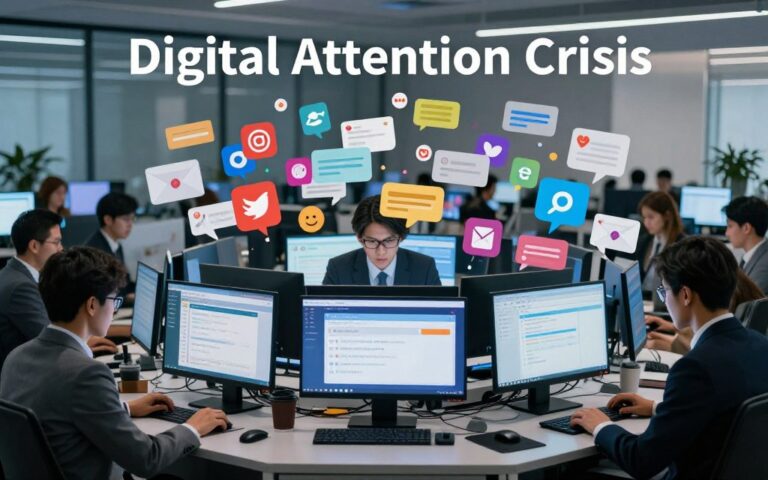
Every ping, badge, and banner competes for a slice of your digital attention. These cues are made to interrupt you. They pull you away from your current task.
Over time, the many stimuli shrink attention span. It becomes harder to focus on one task at a time.
How Notifications Capture Our Attention
Notification design uses sounds, badges, and banners to trigger an orienting reflex. Short alerts and red badges signal urgency. They make people check devices even during work.
Neuroimaging and behavioral studies show these interruptions cause dopamine responses. This ties to reward expectancy and reinforces checking behavior.
Notifications disrupt working memory and break up thought. A single alert shifts attention, causing small concentration losses throughout the day.
Sales and product teams at Apple and Google study these behaviors. They refine alerts’ appearance and timing to optimize engagement.
The Science Behind Multitasking Online
Multitasking is really rapid task-switching. Cognitive science shows that switching apps causes slower completion, more errors, and weaker working memory.
The American Psychological Association shows attention residue—thoughts from earlier tasks—reduces efficiency on new tasks.
Neuroscientists find frequent switching tires executive control brain networks. This causes mental fatigue and lowers focus capacity.
Shortened attention harms deep learning and problem solving.
Managing Distractions in the Digital Age
Practical tactics help protect attention and reduce overload. Use Do Not Disturb modes and schedule notification batching. Disable unneeded push alerts.
iOS and Android focus features hide distracting apps during work periods.
Organizations can set meeting-free times and encourage single-task work. Methods like the Pomodoro Technique and Deep Work use timed focus and breaks.
These improve attention by setting clear windows of uninterrupted work.
Constant interruptions have real costs. Harvard research links frequent alerts to higher stress, poor sleep, and lower productivity.
Small changes in handling notifications protect mental energy. This extends meaningful attention in a busy digital world.
The Role of Algorithms in Shaping Our Experience
The platforms we use each day rely on complex algorithms to sort and serve content.
These systems decide what appears first in feeds, shows up in search results, and what users see in recommendations.
That invisible sorting drives much of the attention economy. It influences how much online attention any content can earn.
How algorithms prioritize content
Platforms rank posts using several signals. Engagement metrics like likes, comments, and shares tell algorithms what keeps users interested.
Recency helps newer content appear for timely relevance. Personalization looks at past behavior to predict what a person may click next.
Monetization incentives push platforms to favor content that boosts ad revenue.
Search engines and recommendation systems work on similar logic. Google’s relevance algorithms match queries with useful pages.
YouTube suggests videos that maximize session length. TikTok’s For You feed learns fast from micro-interactions and pushes content that grabs attention.
All these prioritize retention and attention over neutral exposure.
The effect of echo chambers on attention
Echo chambers form when algorithms amplify content that matches a user’s views. Filter bubbles narrow what people see by favoring familiar sources.
Research from MIT and Pew shows algorithmic sorting can increase polarization. It extends time spent inside ideologically uniform networks.
Feeds that reinforce beliefs keep users locked in by showing more of the same. This makes it harder to see opposing viewpoints.
The result is a stronger pull on online attention and less room for discovery.
Balancing personalization and choice
Personalization delivers relevant content. It saves time for users wanting quick answers but comes with trade-offs.
Too much personalization reduces chance encounters and limits exposure to new ideas. Platforms offer tools to adjust preferences and clear history to reset recommendations.
Ethical design and calls for algorithmic transparency aim to give users more control. Policy debates focus on letting people choose diverse feeds while keeping useful personalization.
For creators and brands, this tension affects strategy. Short-form hooks optimize retention, but chasing metrics can push content toward sensationalism.
Understanding these dynamics helps publishers, marketers, and readers navigate the attention economy with intent.
Clearer controls and mindful content choices reduce pressure to chase metrics and improve long-term engagement.
Understanding Clickbait and its Effects
Clickbait drives clicks by promising more than the content actually delivers. It plays on curiosity and a fear of missing out. This section explains what clickbait looks like and why it can harm publishers.
It also shows how writers can use ethical ways to grab attention instead.
Defining Clickbait and Its Characteristics
Clickbait means headlines or thumbnails that exaggerate or mislead to get clicks. Signs include sensational language and vague teasers like “You’ll never believe…”.
It also uses excessive punctuation such as “!!!” and headlines that don’t match the article content.
The Dangers of Clickbait Culture
Relying on clickbait hurts brand trust and reputation. Readers who feel tricked leave quickly, which raises bounce rates and shortens time-on-site.
Studies from Columbia and the University of Pennsylvania show that traffic spikes often come with drops in repeat visits and attention.
Platforms like Google and Facebook now penalize low-quality content. Publishers chasing clicks without good substance face lower search rankings and less audience growth.
Alternatives to Attention-Grabbing Titles
Writers can spark curiosity without lying by focusing on clear value. Use headlines that promise benefits, like “How to X in Y Minutes” or “Research Shows Z Improves X by Y%.”
These headline styles respect readers and help keep their attention longer.
Effective techniques include using data-backed claims, specific time frames, and teasers that honestly match the article. Matching titles to content improves dwell time and SEO.
| Headline Type | Typical Traits | Impact on Audience | Best Use |
|---|---|---|---|
| Clickbait | Sensational wording, vagueness, mismatch | Short visits, mistrust, higher bounce rates | Avoid for long-term brand building |
| Curiosity-Driven Honest | Teases benefit, stays truthful, specific | Higher attention retention, repeat visits | Use for how-to, explainers, case studies |
| Value-First | Clear benefit, measurable claim, timed | Improved dwell time, better search ranking | Ideal for tutorials and product content |
The Importance of Content Quality
Good content wins attention over time. When creators pair urgency with real value, readers stay longer and return more often.
Building trust with useful, relevant, and actionable material helps stretch fragile attention spans into meaningful engagement.
Balancing Urgency with Value
Tactical urgency can spark clicks, but lasting engagement needs substance. Offer clear benefits up front.
Short, practical tips and step-by-step advice turn curiosity into utility. This mix improves attention without constant sensational hooks.
How High-Quality Content Engages Users
Clarity and credibility are the backbone of strong content. Use clean structure, reputable data, and human stories to create emotion.
Visual design and multimedia help comprehension and hold interest. Pages delivering on expectations show longer visits and deeper scrolls.
These measures indicate genuine attention retention instead of fleeting pageviews.
Strategies for Creating Shareable Content
- Open with a strong hook and finish with a clear takeaway to aid memory and sharing.
- Use data from research and established outlets to boost credibility.
- Optimize social previews with compelling images and concise meta descriptions for platforms like X, Facebook, LinkedIn, and TikTok.
- Include videos, infographics, and short clips to suit different attention spans and platform formats.
- Invite community interaction through comments, polls, and calls to action to increase repeat visits.
Measure success by tracking engagement quality: time on page, scroll depth, and repeat visits reveal how well content supports attention optimization.
Focus on these metrics instead of raw pageviews to understand real reader value.
The Economics of Attention
Brands and platforms now see attention as a scarce and valuable resource. The economics of attention guides media buys, creative choices, and product design. Advertisers tracking real user engagement get better returns on ad spend.
Smart attention management helps teams move budgets from vanity metrics to useful outcomes.
Measuring Attention: Views vs. Engagement
Impressions and raw views show reach, but not if an ad or article kept interest. Engagement metrics like watch time, click-through rate, and time on site give a fuller picture. Conversion rates also help measure true interest.
Groups like the Media Rating Council promote attention-based measures such as Active View and attention minutes. These metrics help marketers compare placement quality, not just quantity. This leads to smarter attention optimization.
The Price of Attention: Advertising Revenues
Advertisers pay for attention through CPMs, cost-per-click, and auctions on platforms like Google Ads and Meta Ads. Premium attention, which means longer sessions and engaged audiences, commands higher ad rates and better ROI.
Publishers showing sustained engagement can ask for higher ad revenues. Marketers focused on attention management often improve conversion and lifetime value. This raises the true value of each ad dollar.
Trends in Digital Advertising for 2024
Short-form video content on TikTok and YouTube Shorts keeps growing. Brands are investing heavily in creator partnerships and influencer marketing to capture true attention. Contextual and privacy-safe targeting grow after third-party cookies phase out.
Programmatic connected-TV (CTV) buying increases reach into living rooms. Reports from eMarketer and IAB show shifts toward attention metrics and creator-driven campaigns. Businesses should spend on contexts that deliver quality attention and track results beyond impressions.
- Prioritize placements that show time-based engagement.
- Measure outcomes with attribution and customer lifetime value.
- Allocate more budget to creator partnerships that drive genuine attention optimization.
The Role of Influencers in the Attention Economy
Influencers have become key players by shaping where online attention flows. Brands and creators trade familiarity for visibility. This section outlines how creators capture engagement and balance authenticity with paid posts.
It also explains why follower counts no longer tell the whole story.
How Influencers Drive Engagement
Creators build parasocial relationships that feel personal to followers. This closeness creates trust, which grows when an influencer recommends a product. Platforms like YouTube, TikTok, and Instagram reward native content and live interaction.
Attention-grabbing techniques such as rapid edits, story arcs, and direct calls to action pull attention toward a post. Micro-influencers often excel at tailored replies and community features that grow loyalty and repeat engagement.
Authenticity vs. Promotion in Influencer Marketing
Sponsored posts work best when the message matches the creator’s usual topics and voice. Research and FTC guidelines show that clear disclosures maintain credibility. Audiences spot forced promotion quickly, reducing engagement and trust.
Creators who blend honest reviews with clear sponsorship notes keep authenticity intact. Brands that allow creative control see better resonance and less resistance from followers.
Impact of Follower Count on Brand Perception
Large follower counts give instant social proof and boost brand awareness fast. Still, follower numbers predict conversion less than engagement rate and audience fit. Micro-influencers with 10k–100k followers often deliver higher interaction and better ROI.
Brands should weigh engagement rate, audience demographics, past results, and content quality when selecting creators. Tools like CreatorIQ and Upfluence help teams compare creators, track performance, and manage partnerships.
- Engagement rate — measures depth of audience involvement.
- Audience relevance — aligns demographic fit with product market.
- Creative fit — ensures the content uses attention grabbing techniques that feel native.
- Past performance — validates conversion or awareness impact.
Consumer Behavior in the Attention Economy
Brands that win attention shape consumer behavior at every funnel stage. Short bursts create awareness, and sustained engagement builds trust. Smooth checkout turns interest into purchase.
Marketers who understand attention span design journeys matching how people browse, compare, and buy.
How attention influences purchasing decisions
At the top of the funnel, brand awareness depends on capturing initial attention. A memorable ad or headline raises curiosity. This nudges shoppers to learn more.
Mid-funnel activity focuses on engagement with content, product pages, and reviews. Repeated exposure raises the chance of conversion. Steady visibility increases trust and purchase intent.
Bottom-funnel moments require low friction and clear incentives. If attention management fails, checkout stalls and abandonment spikes. Track conversion by channel to find where attention drops.
Identify messages that move users from interest to action.
The role of user experience in retention
User experience keeps customers coming back. Fast load times, clear navigation, and mobile-first design stop attention from wandering.
Google’s Core Web Vitals ties performance to search rank and user retention. Technical health affects both visibility and loyalty.
Accessibility and simple flows reduce cognitive load and protect attention span. Progressive disclosure helps users focus on the next step.
Use analytics to measure session duration and repeat purchase rate as signs your experience fosters attention retention.
Strategies to improve the digital customer journey
Streamline onboarding to capture attention early. Ask only essential details, then use progressive profiling to learn more over time.
Personalize messaging based on consented data to keep relevance high without overwhelming users. Well-timed email or push sequences re-engage customers while respecting attention.
Reduce friction at checkout with saved payment options and one-click flows. Run A/B tests and cohort analysis to measure changes on attention retention.
Prioritize metrics like retention rate, churn, conversion rate by channel, and lifetime value to guide decisions.
| Focus Area | Action | Primary KPI |
|---|---|---|
| Top-of-funnel discovery | Short, targeted ads and helpful landing pages | Brand lift and impressions-to-click rate |
| Mid-funnel engagement | Rich content, reviews, and personalized recommendations | Average session duration and engagement depth |
| Bottom-funnel conversion | Frictionless checkout and clear CTAs | Conversion rate by channel and checkout abandonment |
| Retention and loyalty | Performance improvements and tailored re-engagement | Retention rate, repeat purchase rate, lifetime value |
| Attention insights | Experimentation, A/B testing, cohort analysis | Attention retention metrics and cohort lift |
For a deeper look at how platforms compete for attention and trade-offs shaping youth behavior, read this piece by the Humane Technology movement at the attention economy. Practical attention management and clear UX choices let brands meet customers where their focus actually is.
The Future of the Attention Economy
The next chapter in digital attention will split into two clear paths. Short-form clips and bite-sized feeds will stay popular.
A countertrend toward long-form, high-value experiences will grow in niches where depth matters.
Predictions for Attention Span in 2024
Expect continued dominance of short content on platforms like TikTok and YouTube Shorts. Podcasts and newsletters will gain traction for sustained engagement.
Research shows the average attention span shifts by context, not just time. People seek quick hits and focused sessions depending on intent.
Advertisers will test new metrics to value minutes in meaningful contexts. This will push optimization toward quality signals like completion rates and repeat visits.
The Rise of Sustainable Attention Practices
Sustainable attention means designing content and ads that respect user time and mental health.
Publishers on Substack, Patreon, and major podcast networks show paid, ad-light experiences attract audiences who prefer thoughtful work.
Movements for ad quality standards and “slow media” will grow. Privacy rules and cookie deprecation will force marketers to prioritize permissioned, high-intent engagement.
Brands that use respectful tactics will earn true loyalty.
Emerging Trends in Content Consumption
Audio formats and long-form newsletters will expand. Immersive AR/VR experiments are also rising.
Community-first platforms like Discord and Telegram will host deeper conversations that traditional feeds cannot replicate.
Monetization will move toward subscriptions, native commerce, and creator-driven sales on Instagram Shops and TikTok Shop.
Advertisers will buy attention differently as measurement evolves and regulators reshape the market.
For more context on how attention is treated as a commodity and the forces shaping these shifts, see this analysis from Georgetown’s Denny Center: the attention economy.
Strategies for Navigating the Attention Economy
People spend hours online without realizing how their attention fragments. Practical steps can help you reclaim focus and reduce digital overwhelm. Small changes add up when you aim for attention optimization.
Tips for reducing digital overwhelm
Start with a notification audit. Turn off nonessential alerts and keep only messages that need action. Unsubscribe from mailing lists that no longer serve you.
Curate social feeds by unfollowing or muting accounts that distract you. Schedule specific windows for news and social browsing. Try device-free times during meals and before bed.
At work, set shared expectations for response times. Block meeting-free periods to protect deep work.
Mindfulness practices for better focus
Daily short practices improve concentration. Commit to 10–20 minutes of guided mindfulness or focused-attention exercises. Single-tasking sessions strengthen the brain’s ability to sustain attention.
Use breathing techniques to reset attention when pulled in many directions. Keep a short journal to externalize tasks and clear mental clutter. Research on MBSR shows benefits for attention and reduced stress.
Tools for managing your online experience
Adopt platform features and apps that enforce limits. Use iOS Focus or Android Digital Wellbeing to reduce interruptions. Install website blockers such as Freedom or StayFocusd for longer work times.
Manage email with tools like SaneBox. Follow curated feeds through Feedly. Choose privacy-focused browsers like Brave to avoid algorithmic distractions.
Use YouTube’s “Watch Later” and “Don’t recommend channel.” Create Twitter/X lists and build custom Reddit feeds for platform-level control.
Organizational and tracking tips
Use time-tracking and analytics to see where your attention goes. Review data weekly and adjust habits for better attention optimization. Agree on team norms for expected response times to reduce checking and enable deeper focus.
Iterate on these practices regularly. Small, measurable changes yield clearer work, less stress, and a safer online experience. These help reduce digital overwhelm over time.
Conclusion: Finding Balance in the Digital World
The online world often feels urgent, but urgency is usually made, not inevitable. Start by reflecting on your habits.
Audit your daily routines and note triggers like notifications or boredom. Track time spent on major apps for a week. A short self-assessment reveals pain points and makes attention management clearer.
Mindful consumption matters. Choose reputable sources and limit exposure to sensational content. Prioritize depth over fast scrolling.
Studies show reduced anxiety and better sleep when screen time drops. Mindful consumption supports mental health and productivity. Small, consistent shifts bring clear benefits.
Reclaim attention with a simple action plan. Set clear priorities and time blocks. Use tech tools to enforce boundaries.
Favor high-quality creators you trust. Adopt brief mindfulness habits to restore focus. These steps make online attention manageable even in chaos.
Remember that small changes compound. With awareness and deliberate practice, people can reclaim attention and improve attention management. Use the internet on your terms.